
A beginner’s first throwing session should build confidence, not fear. The landing surface shapes that experience before the coach explains a single technique. If the floor feels hard, unstable or uneven, learners may tense their bodies, resist the movement and develop poor habits. A suitable surface gives them enough reassurance to practise breakfalls, accept controlled throws and focus on timing.
The starting point is the activity itself. Beginner drills usually involve low-height entries, kneeling throws, guided rotations and repeated breakfalls. These movements create impact in different places, so the surface must spread force rather than simply feel soft underfoot. Judo mats are designed for this type of training because they combine cushioning with the firmness needed for stable movement.
Thickness matters, but it should not be judged alone. A very soft mat can make balance work difficult and may twist under a planted foot. A thin surface may feel stable yet offer too little protection for repeated landings. Coaches should consider the mat’s density, the floor beneath it and the age and size of the group. A sprung subfloor or permanent dojo base changes the amount of cushioning required.
Grip is equally important. The underside should resist sliding, especially when mats are placed over polished timber or smooth concrete. The top surface should allow bare feet to move without catching, while still providing enough traction for safe entries. Any area that shifts during a drill should be taken out of use until it can be secured.
The layout needs careful planning. Mats should meet closely, with no raised edges or gaps that could trap toes or fingers. The throwing zone should also extend beyond the point where the coach expects learners to land. Beginners do not always travel in a straight line, and an extra border around the working area creates useful tolerance for imperfect movement.
Cleaning and inspection belong in the selection process, not just the maintenance plan. Surfaces used by several classes need to tolerate regular wiping with an appropriate cleaning product. Seams, corners and textured finishes should be easy to examine. Damaged covers, compressed sections or exposed foam can reduce protection and hygiene.
Portability may influence the final choice. A community club that packs away after every session may value lighter modules that stack neatly. A permanent venue can consider heavier judo mats that remain locked together and provide a more consistent training field. Storage space, lifting demands and setup time all affect whether a technically suitable product works in practice.
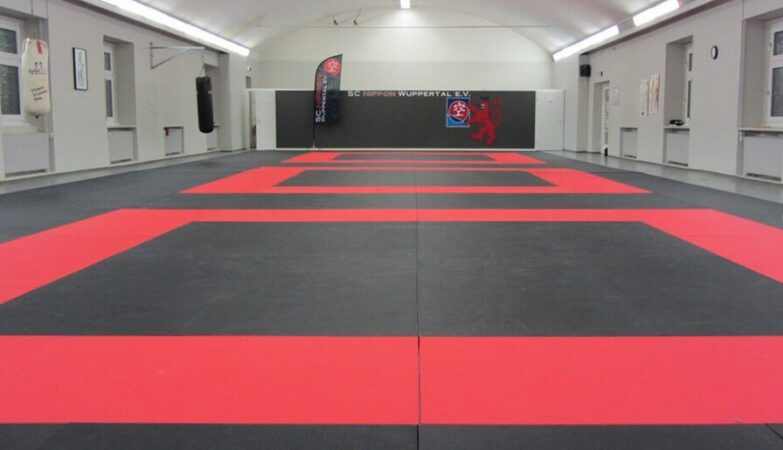
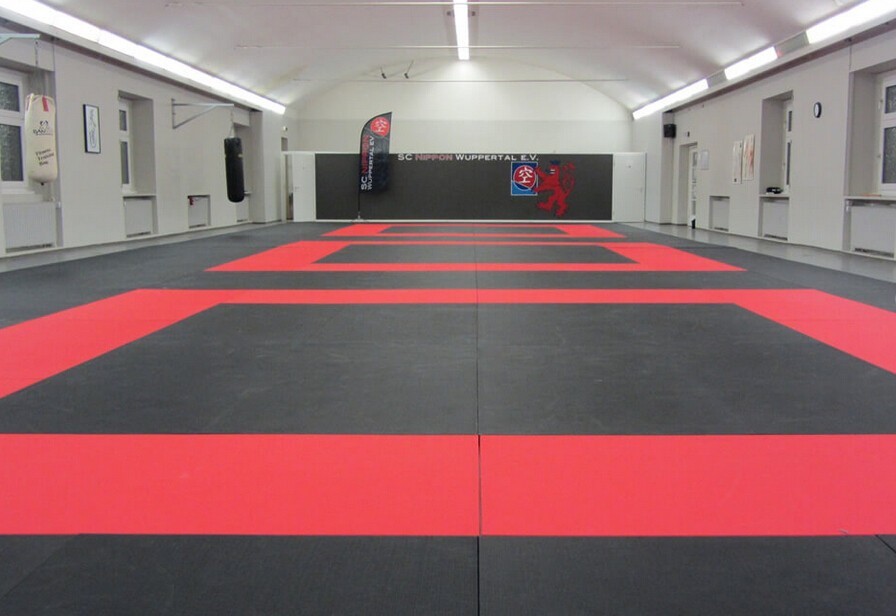
Colour and boundary marking can support instruction. Contrasting edge pieces help younger learners recognise the safe zone, while a clearly defined centre area makes partner rotation easier. These details do not replace coaching, but they can reduce confusion during busy classes.
Before purchase, the club should test a sample under realistic conditions. Coaches can check how it feels during breakfalls, whether it moves under repeated footwork and how quickly the surface recovers after impact. They should also confirm that the chosen system suits the manufacturer’s intended use.
Cost should be assessed across the whole system. Delivery, edge pieces, storage racks and replacement panels may affect the real budget. Clubs should ask how individual modules can be replaced and whether the finish is suitable for regular disinfecting. A cheaper surface that moves, wears unevenly or cannot be maintained may create more work over time. Written setup and care instructions also help volunteers use the area consistently, especially when judo mats are moved between venues.
The club should also document the finished layout, including panel direction and boundary size. That reference helps different coaches rebuild the same safe area instead of making a new judgement at every session.
The best judo mats are not simply the thickest or most expensive option. They match the drills, the room and the people using them. When the surface supports stable movement and controlled landings, beginners can learn to fall well, progress gradually and approach throwing practice with greater trust.