
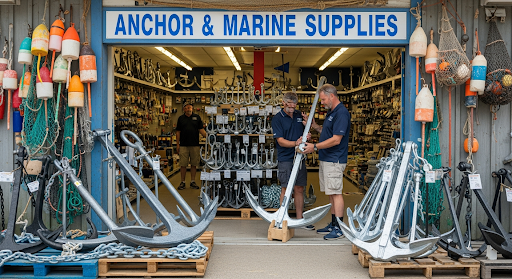
When a vessel reaches its destination, the journey is not truly over until it is safely secured. In harbors, offshore zones, and open waters, the humble anchor becomes the quiet guardian of the ship, holding it steady against wind, waves, and unseen underwater forces. While often overlooked, the quality of a marine anchor can make the difference between calm operations and costly emergencies. Beyond stability, a reliable anchor also gives crews confidence to focus on navigation, cargo handling, and onboard operations without constant concern about drift. In busy ports and unpredictable offshore environments, this confidence often comes from working with trusted marine anchor dealers who understand real-world marine challenges and recommend equipment proven to perform under pressure. A well-chosen anchor doesn’t just hold a vessel in place, it supports safer decisions, smoother operations, and peace of mind for everyone on board. This blog explores why investing in the right anchor is not just a technical decision, but a critical safety choice.
The Anchor’s Role Beyond “Parking” a Vessel
Many people think of an anchor as a simple tool to stop a vessel from drifting. In reality, it plays a far more complex role. A well-designed anchor distributes forces evenly, adapts to seabed conditions, and works in harmony with chains and winches to stabilize the vessel.
When weather changes suddenly or currents grow stronger, the anchor becomes the vessel’s first line of defense. A poor-quality anchor may drag, bend, or fail entirely, placing the crew, cargo, and nearby vessels at risk.
What Happens When Anchors Fail
Anchor failure is rarely dramatic at first. It often begins quietly, with slow dragging that goes unnoticed until the vessel has moved dangerously close to shore, structures, or other ships. In busy ports, even a small drift can escalate into collisions, grounding, or environmental damage.
Common causes of failure include:
- Inferior materials that crack or deform under stress
- Poor design that lacks holding power for certain seabeds
- Incorrect weight or size for the vessel
- Inadequate testing and certification
Each of these issues points back to one root cause: compromised quality.
Why Material Quality Makes a Real Difference
Marine anchors operate in one of the harshest environments on earth. Constant exposure to saltwater, pressure, and abrasion demands materials that can endure over time. High-grade steel and proper surface treatments are essential to prevent corrosion and structural weakness.
Quality anchors are manufactured using controlled processes that ensure uniform strength throughout the structure. This consistency is what allows an anchor to perform reliably during repeated deployments, even under heavy loads.
Design and Holding Power: More Than Just Weight
Heavier does not always mean safer. Modern anchor safety depends heavily on design. The shape, fluke angle, and balance determine how quickly and securely an anchor sets into the seabed.
Different seabeds, sand, mud, clay, or rock, require anchors that can adapt and grip effectively. High-quality anchors are engineered to reset themselves if conditions change, reducing the risk of sudden dragging during tidal shifts or storms.
Matching the Anchor to the Vessel
Every vessel has unique requirements based on size, displacement, and operating environment. An anchor that works well for a small cargo vessel may be completely unsuitable for an offshore barge or tug.
Experienced marine anchor dealers understand this balance. They consider vessel specifications, typical sea conditions, and operational demands before recommending an anchor. This tailored approach significantly improves safety and long-term performance.
Compliance, Certification, and Peace of Mind
Marine safety regulations exist for a reason. Certified anchors undergo rigorous testing to meet international standards for strength, durability, and performance. These certifications are not just paperwork; they are evidence that the anchor has been proven under controlled conditions.
Using certified equipment also simplifies inspections and reduces compliance risks. For commercial operators, this translates into fewer delays, smoother audits, and greater confidence during port authority checks.
How Experience Adds Value to Anchor Selection
Choosing an anchor is not just about selecting a product from a catalog. It involves understanding how theory translates into real-world performance. Seasoned suppliers draw on years of field experience, learning from past deployments and customer feedback.
This practical knowledge helps vessel operators avoid common mistakes, such as selecting anchors that are incompatible with local seabed conditions or underestimating the impact of strong currents.
In regions with diverse marine activity, working with knowledgeable marine anchor dealers UAE ensures access to products suited for local operational challenges.
Maintenance: Extending Safety Over Time
Even the best anchor requires regular inspection and maintenance. Corrosion, wear, and deformation can reduce holding power if left unchecked. Quality anchors are easier to maintain because they are built with predictable wear patterns and durable materials.
Routine checks, combined with proper storage and handling, can significantly extend an anchor’s service life. This proactive approach reinforces safety while protecting the investment.
Anchor Systems: Thinking Beyond a Single Component
An anchor never works alone. Chains, shackles, and windlasses all contribute to the system’s overall performance. A high-quality anchor paired with substandard accessories can still fail under load.
Professional suppliers emphasize system compatibility, ensuring every component works together seamlessly. This holistic approach minimizes weak points and maximizes reliability during critical moments.
Building a Culture of Safety Through Equipment Choices
Safety at sea is shaped by everyday decisions. Choosing reliable equipment sends a clear message to crew members that their well-being matters. It also fosters disciplined operations, where procedures are followed and risks are minimized.
When operators invest in quality anchors, they are not just buying hardware; they are reinforcing a culture of responsibility and preparedness.
Conclusion
Marine anchors may not attract much attention during smooth sailing, but their importance becomes undeniable when conditions turn challenging. Quality anchors protect vessels, crews, and the environment by providing stability when it matters most.
For operators who value safety, compliance, and long-term performance, working with experienced suppliers makes all the difference. Companies like Wismar Heavy Equipment TRD LLC exemplify how expertise and dependable equipment can quietly support safer marine operations, one secure anchoring at a time.