
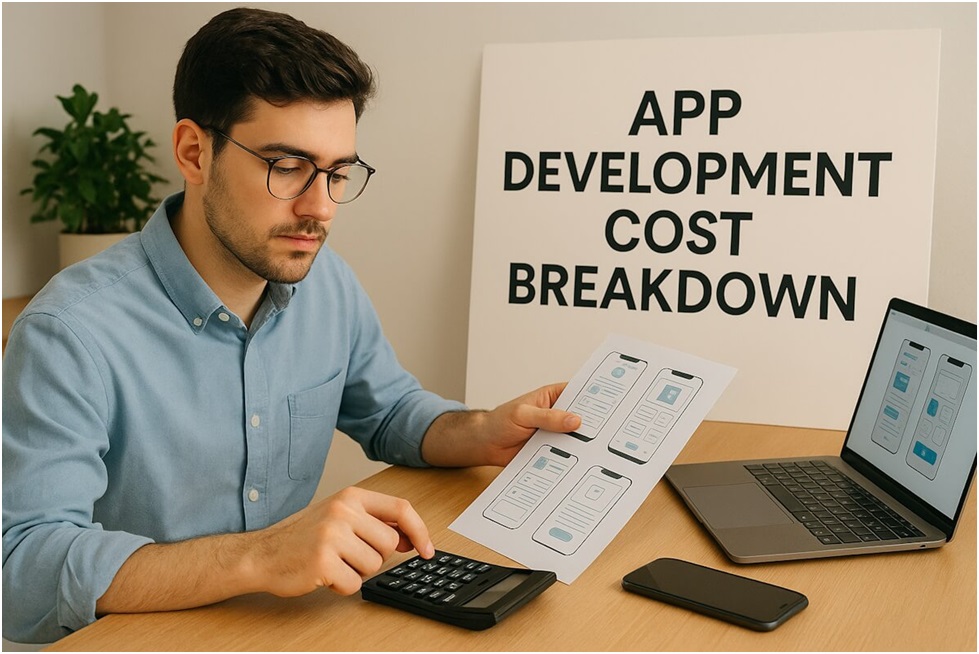
So you’ve got an app idea. Great. Now comes the million-dollar question—or more realistically, the several-thousand-dollar one: how much does it cost to develop an app?
Truth is, app development pricing isn’t one-size-fits-all. Costs vary based on what kind of app you’re building, where you’re hiring your developers, what features you want, and how much ongoing support you’re expecting after launch.
Let’s break this down piece by piece so you can see where your budget’s going and what decisions affect the final number.
What’s the Ballpark Range?
The short answer? Anywhere between $10,000 to $300,000+.
Yeah, that’s a big range. Here’s why: building a simple app like a calculator or to-do list is nothing like creating an AI interview platform or a full-on social media network.
Here’s a rough pricing guide:
- Simple app (basic features, no backend): $10,000 – $25,000
- Medium complexity (APIs, backend, user accounts): $30,000 – $100,000
- Complex app (AI, real-time features, large user base): $100,000 – $300,000+
These aren’t hard rules, but they give you a sense of what to expect.
What Affects App Development Cost?
Alright, let’s break down what actually eats up your budget. It’s more than just writing code.
1. App Type and Complexity
An app that lets users log in, browse products, and place orders is a lot cheaper than something like Uber, which deals with maps, payments, real-time tracking, and matching algorithms.
Think about features like:
- User authentication
- Push notifications
- Real-time chat or video
- GPS/location tracking
- Payment integrations
- Admin panels
- AI-based features (think resume parsing or voice recognition)
Each of these adds time, testing, and cost.
A mobile app using chatgpt, for example, needs backend support for ChatGPT integration, a user interface that handles real-time responses, and strong error handling to keep things stable. That adds complexity fast.
2. Platform: iOS, Android, or Both?
Do you want your app on just iPhone? Just Android? Or both?
- iOS-only is usually cheaper.
- Android-only can take more testing because of the variety of devices.
- Both means building two versions unless you go with cross-platform tools like Flutter or React Native.
A good Mobile App Development Company in USA will walk you through whether you should go native or cross-platform based on your budget and goals.
3. Design & UX (User Experience)
Design isn’t just about pretty screens. It’s about making your app usable and intuitive.
Custom designs cost more than using templates. And animation-heavy interfaces or dynamic components take even longer to build and polish.
Expect to spend around 10% to 20% of your total budget on design alone if you’re aiming for something that feels modern and smooth.
4. Backend Infrastructure
If your app needs to store data, run logic, or connect users—there’s gonna be a backend.
That means setting up:
- Servers
- Databases
- APIs
- Admin dashboards
- Security and data protection
For example, if you’re building an AI interview platform, the backend is where the real work happens. You need video storage, scheduling, evaluation systems, and possibly machine learning processing. All of this requires strong architecture.
Backend work can be 20% to 40% of your total cost depending on how heavy the features are.
5. Third-Party Integrations
Using services like Stripe for payments, Twilio for SMS, or Firebase for notifications? They’ll save you time—but integrating them takes developer hours. And sometimes, they charge usage fees.
Want analytics, real-time chat, file uploads, or chatbot features? Every piece adds to the bill.
6. Development Team Location
Location affects pricing. Big time.
Here’s a rough idea:
- US-based developers: $100 to $200+/hour
- Eastern Europe: $40 to $80/hour
- India & Southeast Asia: $20 to $50/hour
Hiring a Mobile App Development Company in USA gives you easy communication, shared time zones, and often faster turnaround. It costs more, but some businesses are willing to pay for that clarity and trust.
On the flip side, hiring offshore developers can lower the bill. But make sure there’s solid project management and clear expectations.
7. Testing & QA
You can’t skip testing. Buggy apps get deleted fast.
Good QA (quality assurance) teams test across devices, operating systems, and real-world usage conditions.
Testing includes:
- Functional testing
- UI testing
- Load testing
- Security checks
- Beta testing with real users
Expect 15% to 25% of your budget here. More if your app is complex.
8. Ongoing Maintenance & Updates
Launching your app is not the end. It’s just the start.
Apps need updates to stay compatible with new devices and OS versions. You might also need:
- Bug fixes
- Security patches
- New features
- Backend scaling
Plan to spend 15% to 20% of your original budget annually on maintenance.
Cost Examples by App Type
Let’s make this real with some examples:
- Simple To-Do App: Around $15,000
- Food Delivery App: $60,000 to $150,000
- AI interview platform: $100,000 to $250,000
- mobile app using chatgpt: $80,000 to $180,000
- E-commerce App with Admin Panel: $50,000 to $120,000
These aren’t fixed rates, but they’ll give you a rough feel for where your project might land.
Where Do People Usually Go Over Budget?
Here’s where costs sneak up:
- Adding features mid-way
- Underestimating backend needs
- Skipping proper testing (then paying for bug fixes later)
- Not budgeting for post-launch support
- Miscommunication with the dev team
Want to stay on track? Get a clear scope of work upfront. Avoid vague timelines and ask for detailed estimates from the start.
Is It Worth Hiring a Mobile App Development Company in USA?
If you value tight communication, local support, and fewer timezone headaches, yes.
A local team usually gives you more control, clearer contracts, and faster iteration. You might pay more, but you also cut down on misunderstandings, language barriers, and time lags.
That being said, if budget is tight, many companies still go with hybrid models: hiring a project manager in the US and outsourcing the actual coding elsewhere. Just make sure expectations are set and tracked.
Can You Cut Costs Without Cutting Quality?
You can, but it takes strategy.
Here are a few ideas:
- Start with an MVP (Minimum Viable Product)
- Use cross-platform tools to build once for both iOS and Android
- Skip fancy animations in version 1
- Use existing libraries or APIs instead of custom-building everything
- Avoid unnecessary features early on
- Be clear about your goals and audience
You can always add more later. It’s better to launch a solid, usable app than to burn cash building a monster with too many half-baked features.
Final Thought: Plan First, Build Smart
App development is an investment. Like any investment, you want to go in with a plan.
Don’t just chase features—focus on your users, your core value, and the best way to deliver that.
Talk to a few developers. Get different quotes. Compare not just prices but communication style and trust.
Because at the end of the day, your app’s success isn’t just about code. It’s about delivering something people actually want to use—and building it in a way that doesn’t break the bank.
Have a specific idea in mind? Want a rough estimate tailored to your project? Reach out to a Mobile App Development Company in USA and get the ball rolling.
You never know—your next big app might cost less than you think.