
There’s nothing quite like the feeling of looking at a challenging slope in your yard and imagining it transformed. Maybe you see a terraced garden, a flat patch for the kids to play, or a stunning patio with a view. That dream almost always starts with one thing: a retaining wall.
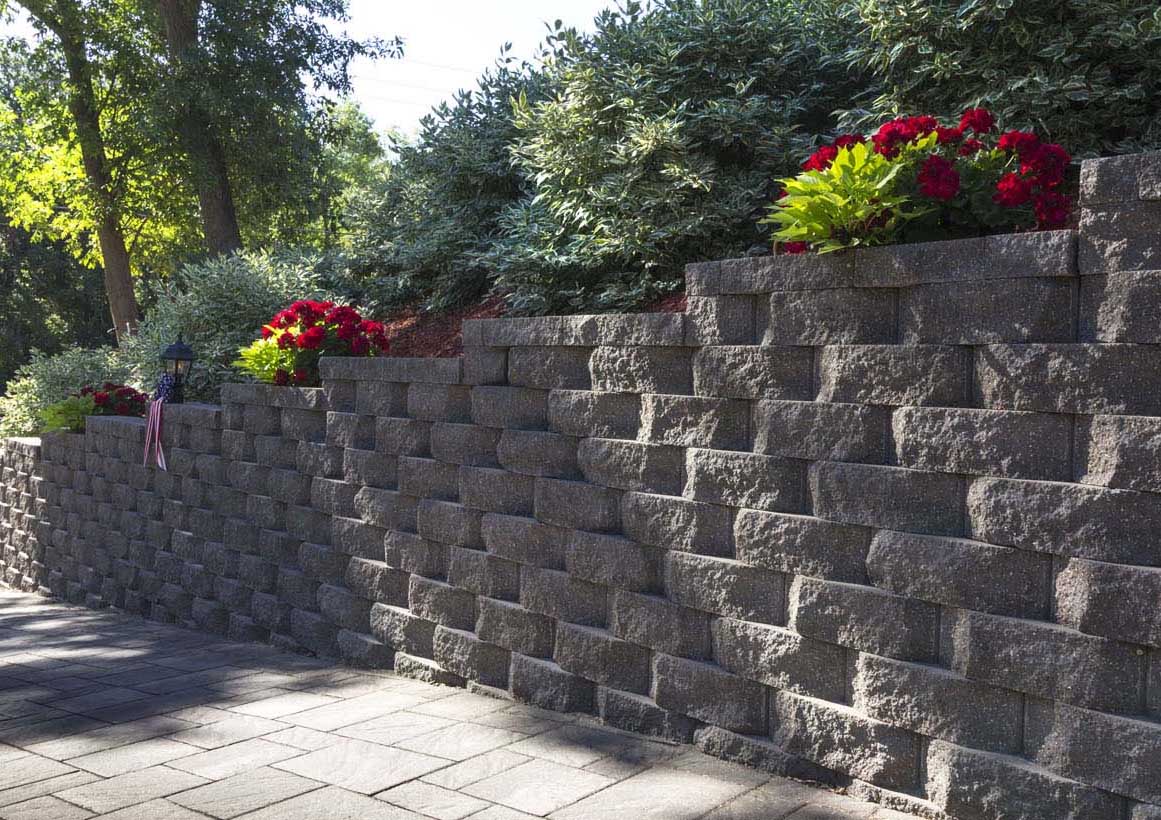
Now, if you’ve wandered down the aisles of your local hardware store, you’ve seen the kits. The interlocking concrete blocks that promise a straightforward DIY project. And for a small garden bed or a gentle rise, they’re a fantastic option. But here’s the truth they don’t print on the box: dirt is heavy, and water is powerful.
When your vision involves a wall taller than your knees, or you’re dealing with soggy ground or unstable soil, you’re moving beyond a landscaping project. You’re entering the world of structural engineering. And that’s where knowing when to call in the pros—like the team at RWSteel—can be the difference between a beautiful asset and a costly, dangerous failure.
The Invisible Enemy: It’s Not Just Dirt, It’s Pressure
Think of the soil behind your wall as a giant, wet sponge trying to push it over. This force is called lateral earth pressure, and it grows exponentially with height. A 1-metre wall has to handle a certain amount of pressure. A 2-metre wall isn’t just dealing with double the weight; it’s dealing with four times the pressure.
Gravity walls (those DIY block systems) rely solely on their own mass to resist this push. It’s a bit like you leaning your shoulder against a door to hold it shut. For a small push (a low wall), you’re fine. But if someone big starts shoving (a tall wall or waterlogged soil), you’re going to get bowled over. This is why you might see those block walls start to bulge or lean after a few heavy rains—they’re losing the fight.
The Professional’s Playbook: How We Handle the Heavy Stuff
So, how do you tame a serious slope? Professionals use two key principles that go beyond the blocks:
- The Magic of Reinforcement: Giving Your Wall a Skeleton.
This is the secret sauce. For taller, stronger walls, we pour concrete but not just any concrete. Inside it, we embed a carefully engineered skeleton of steel rebar.
Think of it this way: concrete is incredibly strong when you squeeze it (compression), but it’s brittle and cracks when you try to bend or pull it (tension). Steel, on the other hand, is fantastically strong in tension. By combining them, you get a superhero material: the concrete handles the crushing weight, and the steel reinforcement handles the bending and pulling forces from the soil. This creates a cantilevered wall—a wall with a hidden concrete foot that acts like a lever, using the weight of the soil on top of it to hold the wall in place. It’s smart, hidden engineering. - The Lifesaver: Drainage, Drainage, Drainage.
Water is public enemy number one for retaining walls. When soil gets saturated, its weight skyrockets, and the pressure can become overwhelming. Every properly engineered wall includes a drainage system behind it—usually gravel and perforated pipes—that acts like a plumbing network, catching water and whisking it safely away. No waterlogged soil means a happy, stable wall.
When Your Project Needs a Pro: The Red Flags
How do you know your dream wall has moved into “call an expert” territory? Watch for these signs:
- The Wall Height: Anything over 1 metre (about waist-high) needs serious consideration and likely professional design.
- The Soil: Are you building into clay that holds water like a sponge? Or loose, sandy soil? Poor conditions demand better engineering.
- What’s Above: Is the wall holding up your driveway, a shed, or a patio? The consequence of failure is much higher.
- The Site: Is the ground already sliding or eroding? This isn’t a DIY fix.
If any of these ring true, getting a professional assessment isn’t an extra cost—it’s essential insurance. A company that specializes in engineered retaining wall solutions will look at your specific site, soil, and needs to design a system that’s not just a wall, but a guaranteed solution.
Building Your Dream, On a Solid Foundation
The goal here isn’t to scare you away from a project. It’s to empower you with the knowledge that some slopes need more than a stack of blocks. They need a smart, engineered system.
Investing in a professionally designed and built retaining wall does two things: it gives you the peace of mind that your new garden, patio, or lawn is safe and secure for decades to come, and it protects the much larger investment you have in your home.
You’ve got the vision. It’s worth making sure the foundation for it is unshakable.